
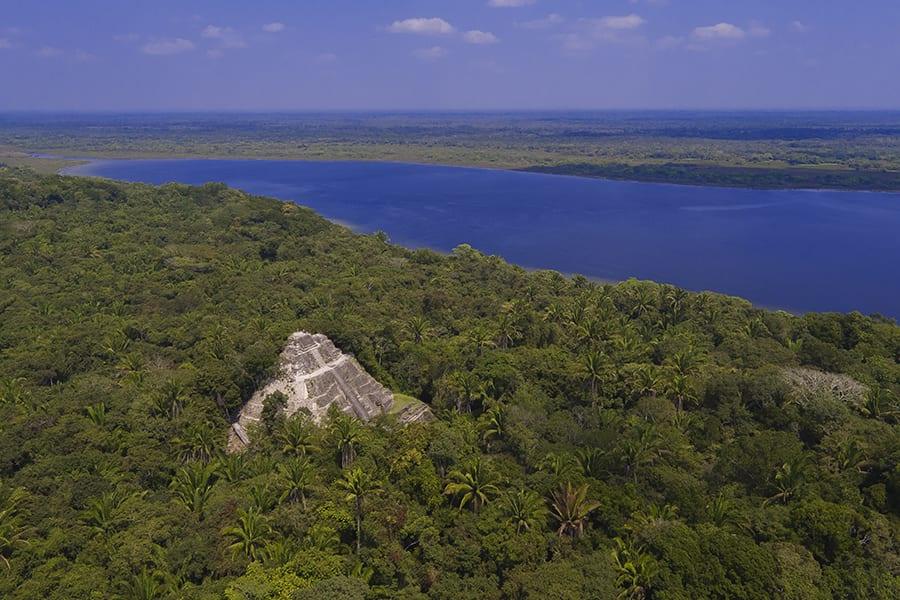

 27 Aug 2019
Belize packs an extraordinary amount of ancient history into a small country. Within a few hours of any coast, you can climb a Maya temple still swallowed by jungle, wade through a cave chamber left untouched for over a thousand years, or walk a plaza that was once home to thousands of people. This guide covers the sites worth building a trip around, organized by region, plus the cave experiences that often go hand in hand with them.
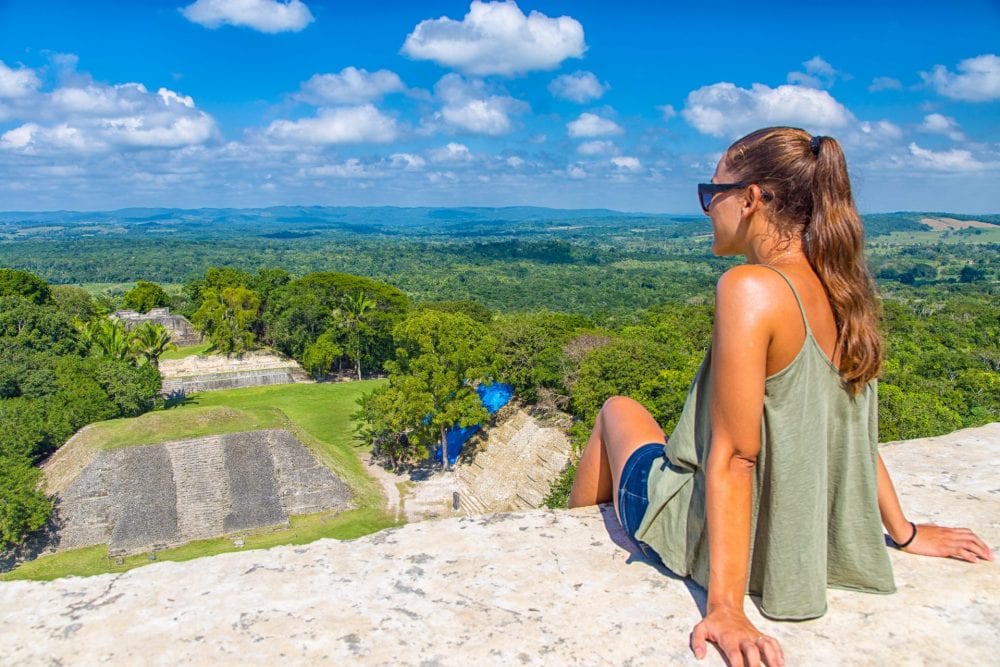
Cayo District: The Heart of Belize’s Maya Ruins
More major sites are concentrated in the Cayo District than anywhere else in the country, which is why most ruins-focused itineraries use San Ignacio as a base.
Xunantunich sits just outside San Ignacio, right near the Guatemalan border, and is one of the most visited and accessible sites in Belize. Getting there means crossing the Mopan River on a small hand cranked ferry, part of the experience for most visitors, before a short climb to El Castillo, one of the tallest Maya structures in the country, with views reaching into Guatemala on a clear day.
Caracol, deep in the Chiquibul Forest Reserve, is the largest known Maya site in Belize, with a population at its peak estimated to have rivaled neighboring Tikal in Guatemala. The site is still only partially excavated, and Caana, or “Sky Palace,” remains the tallest man made structure in the country. The road in is rougher and typically requires a guided tour, which is part of why the site still feels remote even as one of the country’s biggest draws.
Cahal Pech sits right on the edge of San Ignacio itself, making it one of the easiest sites in the country to fit into a short visit, with hilltop views over the surrounding valley and none of the travel time that Caracol or Xunantunich require.
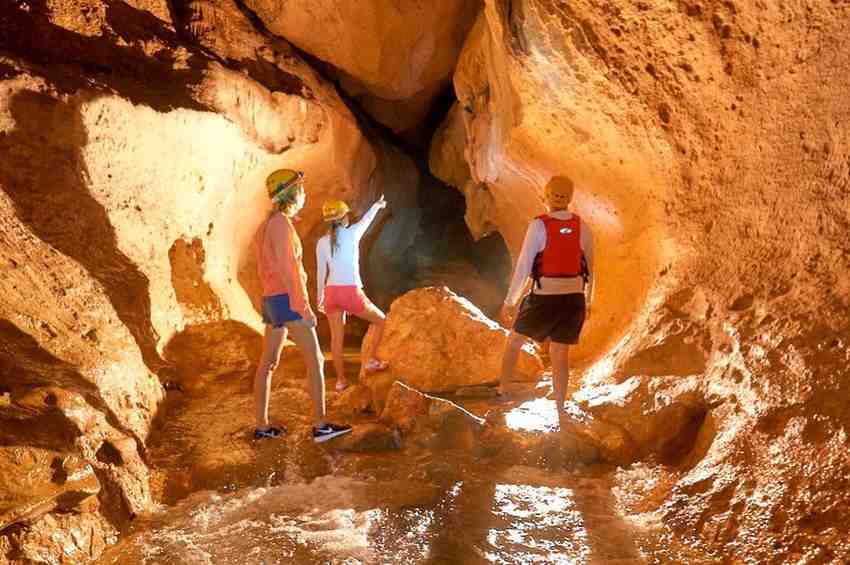
Cave Adventures: Where Archaeology Goes Underground
Some of Belize’s most memorable archaeological experiences aren’t ruins at all, they’re caves the ancient Maya used for ceremonial purposes, left largely undisturbed for centuries.
The Actun Tunichil Muknal cave, almost universally known as the ATM Cave, is one of the most talked about experiences in the country. The tour involves wading and swimming through a river cave system to reach a chamber containing centuries old ceremonial remains and artifacts, including a skeleton calcified into the cave floor known locally as the Crystal Maiden. Access requires a licensed guide and cameras are not permitted inside, but travelers who do it consistently rank it among the most memorable things they’ve done in Central America.
Che Chem Ha Cave, southeast of Benque Viejo, was only discovered in 1989 when a local farmer’s dog led him to an opening in a boulder formation. Inside, a 200 meter tunnel opens into chambers still holding hundreds of ancient pottery vessels, some believed to have been used for collecting ceremonial water. As with the ATM Cave, visitors can only enter with a guide.
St. Herman’s Blue Hole National Park, on the Hummingbird Highway between San Ignacio and the coast, pairs a turquoise, jungle ringed freshwater swimming hole with an adjoining cave, St. Herman’s Cave, that can be explored with a guide. It’s worth being clear about the name here: this inland Blue Hole is a completely different place from the offshore Great Blue Hole made famous by aerial photos, a common point of confusion for first time visitors. Swimming at St. Herman’s requires no cave experience at all, making it an easy stop for families even without the cave portion.
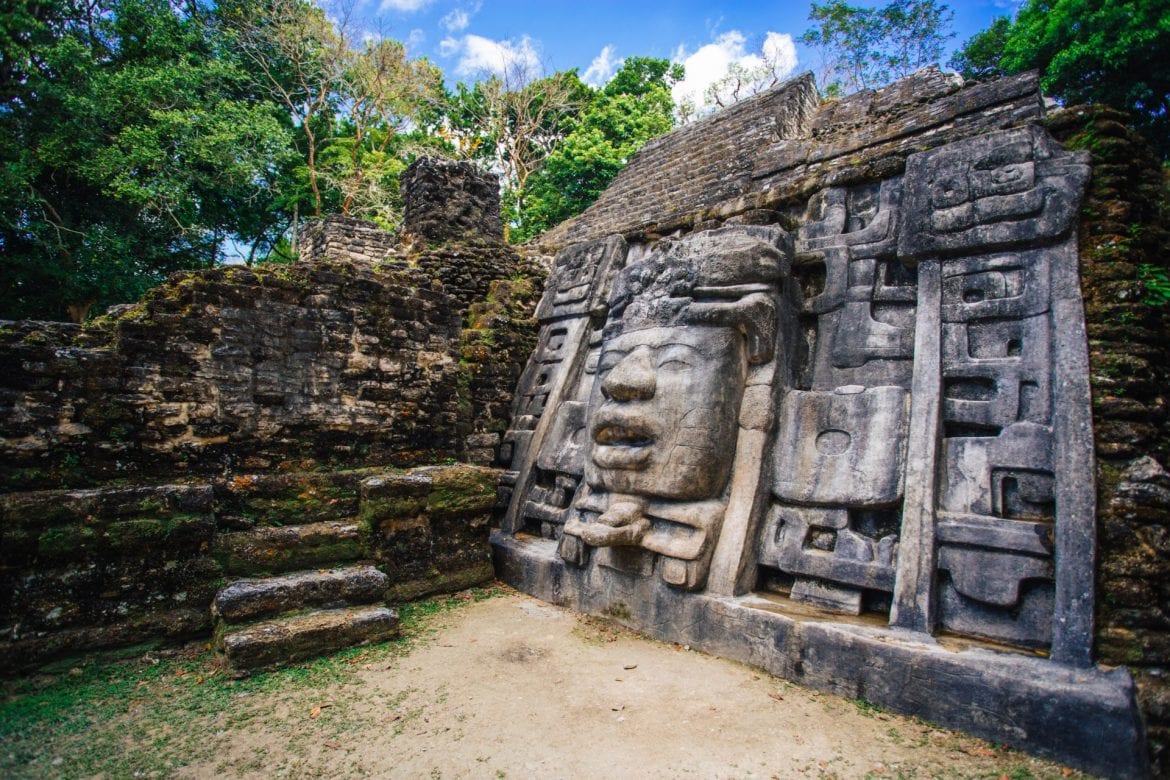
Northern Belize: Lamanai and Altun Ha
Lamanai, reached by a scenic boat ride up the New River Lagoon from Orange Walk Town, is one of the most rewarding sites in the country, with hundreds of mapped structures and a history of continuous occupation stretching back over three thousand years, among the longest of any documented Maya city. Its High Temple offers sweeping views over the jungle canopy, and because the site is reachable only by boat or a longer overland drive, it tends to feel far less crowded than sites closer to the western highway.
Altun Ha, about 31 miles north of Belize City, is one of the most accessible major sites in the country for travelers with limited time, easily reached as a half day trip. Known locally as “Rockstone Pond,” it’s a smaller and more compact site than Lamanai or Caracol, which makes it a good option for cruise passengers or anyone connecting through Belize City with only a few hours to spare.
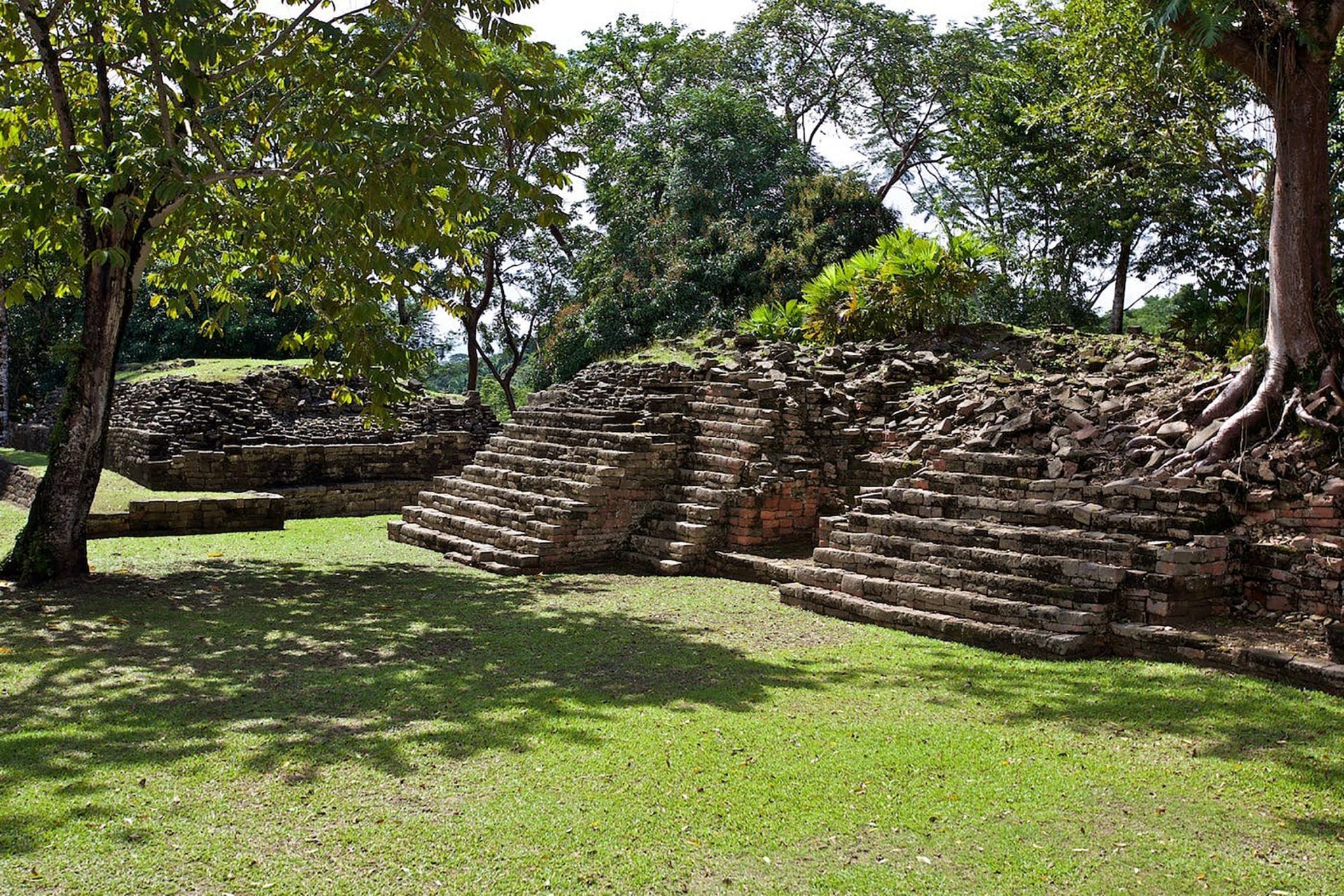
Southern Belize: Nim Li Punit and Lubaantun
Toledo District’s ruins see far fewer visitors than the sites further north, which is exactly the appeal for travelers who want history without the crowds.
Nim Li Punit, near the village of Indian Creek about 50 kilometers north of Punta Gorda, takes its name, meaning “Big Hat,” from an elaborate headdress carved into one of its stelae. The site’s step pyramids are arranged around three plazas, and its builders used mortar in construction, a detail that sets it apart from its neighbor Lubaantun.
Lubaantun, about an hour from Punta Gorda, is known for a dry stone construction technique, large stone blocks stacked without any mortar between them, along with rounded corners unusual among Maya sites. It’s also the source of one of Belize’s more famous legends: a supposed crystal skull said to have been found here in 1924, though no excavation record supports the claim and the skull is now widely believed to be a modern creation. True or not, it’s a story most guides are happy to tell on site.
Planning Your Trip to Belize’s Archaeological Sites
The dry season, roughly late November through May, is the most reliable window for site access and cave tours, when water levels in cave systems are lower and more predictable, and unpaved roads to sites like Caracol are easier going. Many of the more significant sites, including the ATM Cave, Che Chem Ha, and Caracol, require a licensed guide, both for road conditions in remote areas and to protect the sites themselves. Xunantunich, Cahal Pech, and Altun Ha can be visited independently, making them good options for a self-planned itinerary.
Frequently Asked Questions
Is St. Herman’s Blue Hole the same as the Great Blue Hole?
No, and this is a common point of confusion. St. Herman’s Blue Hole is an inland freshwater swimming hole in the Cayo District, while the Great Blue Hole is a large marine sinkhole off the coast, part of Lighthouse Reef. They’re unrelated and two completely different experiences. They just happen to share a similar name.
Do I need a guide to visit Belize’s Maya ruins?
It depends on the site. Xunantunich, Cahal Pech, and Altun Ha can be visited independently. Caracol, the ATM Cave, and Che Chem Ha Cave require a licensed guide, both for site protection and, in the case of the caves, for safety.
How many days should I plan for visiting Belize’s archaeological sites?
Seeing sites within one region, such as Cayo’s Xunantunich, Caracol, and Cahal Pech, comfortably fits into three to four days. Covering sites across multiple regions, including the north and south, is realistic over a week to ten day trip.
Is the Lubaantun crystal skull real?
Almost certainly not as originally claimed. No excavation record from the site documents its discovery, and later analysis suggests it was made with modern tools rather than ancient Maya craftsmanship. It remains a popular story told on site regardless.
Are any of these sites good for kids?
Altun Ha, Lamanai, Cahal Pech, Xunantunich, Caracol and the swimming portion of St. Herman’s Blue Hole National Park (without the cave) are all manageable for families with children. The ATM Cave and Che Chem Ha Cave involve wading, swimming, and confined spaces, and are better suited to older kids and adults.
How much does it cost to visit a Maya Ruin in Belize?
The cost to visit a Maya ruin in Belize depends on whether you travel independently or book an all-inclusive tour. A self-guided visit costs between $5 and $25 USD per person for the entry fee, plus the cost of your transportation. In contrast, organized guided tours range from $60 to over $240 USD per person, depending on the site’s remoteness and what activities are bundled into the itinerary.
Explore more of Belize’s regions in our Cayo and Western Belize guide, our Northern Belize guide, and our Southern Belize guide, or head back to our full Things to Do in Belize hub for the complete picture.