

 09 Sep 2026
Belize packs an outsized amount of wildlife into a small footprint. Jaguars still roam its rainforests in numbers rare for Central America, howler monkeys call from the canopy at dawn, and just offshore, manatees and sea turtles share the same barrier reef that draws divers from around the world. This guide runs through the animals most worth knowing before a trip, starting inland where the bulk of Belize’s wildlife diversity actually lives, before finishing with a shorter look at what’s waiting in the water.

The Five Wild Cats of Belize
Belize is one of the few places left where all five of the Americas’ wild cat species still share the same forest.
1. Jaguar
The largest cat in the Americas and the most iconic animal in Belize, sacred to the ancient Maya and still genuinely present in the country’s protected forests today. Cockscomb Basin Wildlife Sanctuary, established in 1986, was the world’s first protected area created specifically for jaguar conservation. Sightings are rare and mostly limited to dawn, dusk, or night, but Belize remains one of the better places on earth to be in real jaguar habitat.
2. Puma
Also known as the mountain lion, the puma is a sleek, tan colored cat that can weigh up to 200 pounds and is capable of leaping distances that seem implausible for its size. It hunts mostly deer and smaller mammals and, unlike its larger jaguar cousin, is one of the few big cats that can purr rather than roar.
3. Ocelot
Smaller and more elegantly patterned than a jaguar, the ocelot was once heavily hunted for its fur before conservation protections in Belize and elsewhere allowed populations to recover. It’s a strong swimmer and an opportunistic hunter of small mammals, birds, and fish.
4. Margay
The smallest of Belize’s wild cats and by far the most acrobatic, the margay can climb down trees headfirst and rotate its hind feet nearly 180 degrees, an adaptation that makes it a genuinely arboreal hunter rather than just a climber. It hunts mostly at night, high in the canopy.
5. Jaguarundi
An unusual looking cat with a long, low body, a small head, and a tail almost as long as the rest of it, the jaguarundi looks more like a large weasel than a typical cat at first glance. It favors dense scrub near water and, unusually for a wild cat, is often active during the day.
For a deeper look at all five, see our full guide to Belize’s Big Wild Cats.
Belize’s National Animal: The Baird’s Tapir
6. Baird’s Tapir
Known locally as the “mountain cow” despite having nothing to do with cattle, the Baird’s tapir is the largest land mammal in Central America, weighing between 300 and 500 pounds. It’s a nocturnal, strictly vegetarian forest dweller often found under fruiting mango or fig trees, and its habit of dispersing seeds as it moves through the forest has earned it the nickname “gardener of the forest.” Despite being a protected national symbol, it remains endangered, threatened by habitat loss, poaching, and vehicle collisions. For more on Belize’s national animal, see our full profile on the Baird’s Tapir.
Primates of the Rainforest
7. Black Howler Monkey
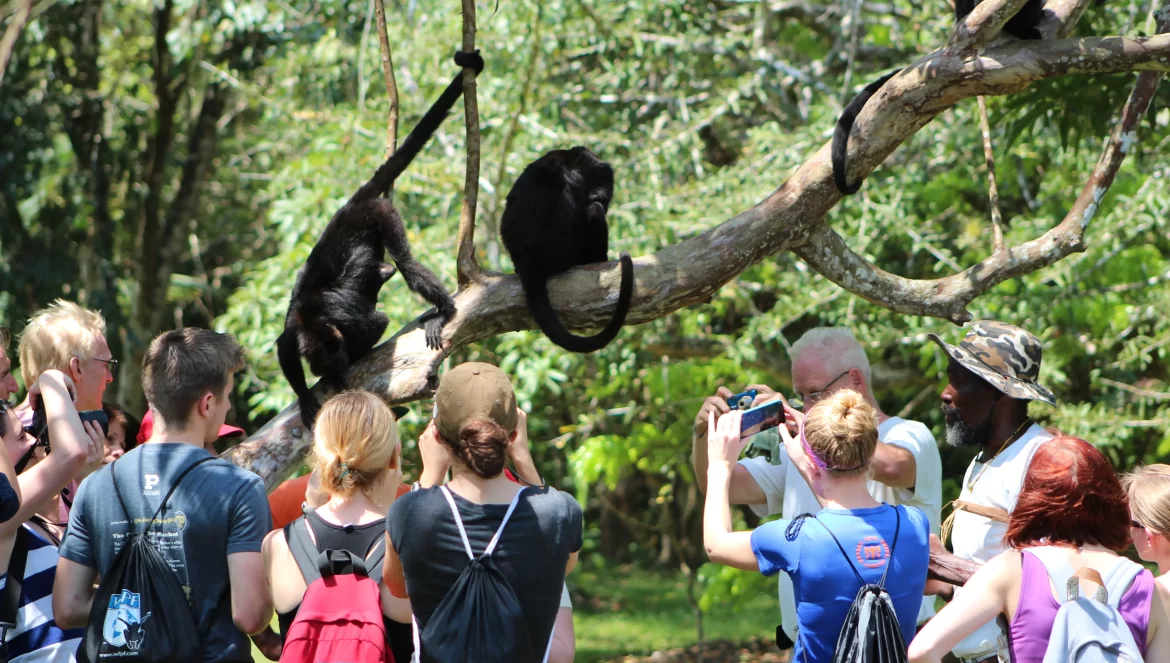
Locally called the “baboon,” despite Belize having no actual baboons, the black howler is best known for a call that can carry for miles through the forest canopy. The Community Baboon Sanctuary along the Belize River protects one of the best known populations in the country, built around a voluntary landowner conservation model rather than a traditional park.
8. Central American Spider Monkey
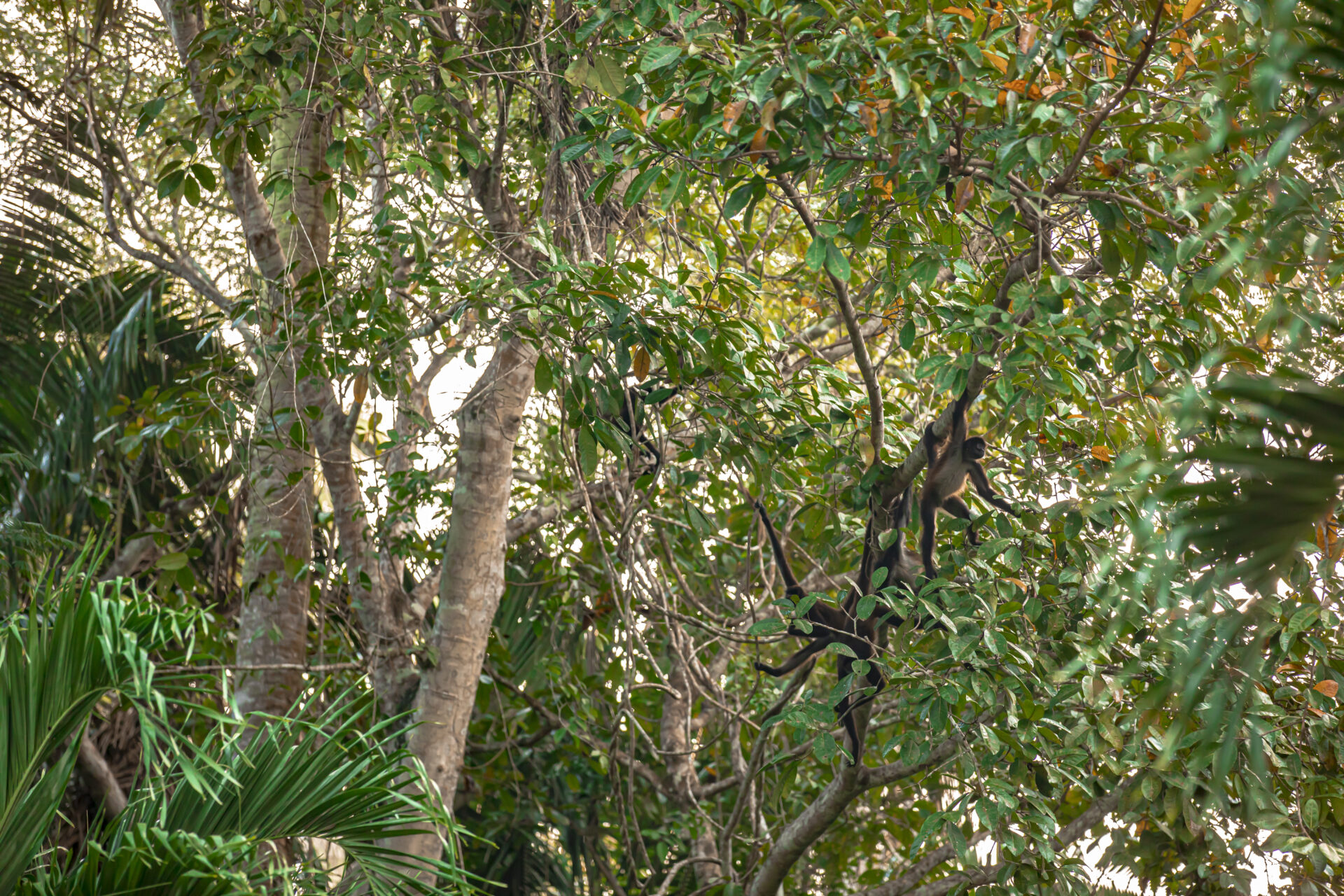
Long limbed and highly agile, spider monkeys move through the upper canopy in loose social groups, using a prehensile tail as a fifth limb to swing between branches. They’re more sensitive to habitat disturbance than howler monkeys, which makes larger protected forests like Cockscomb Basin and the Belize Maya Forest some of the more reliable places to spot them.
Smaller Mammals Worth Knowing
9. Coatimundi
A relative of the raccoon known locally as the “quash,” the coatimundi travels in noisy daytime groups, foraging on the forest floor with a long, upturned snout built for digging out insects and small prey. They’re one of the more commonly spotted mammals in Belize simply because they’re active during the day and don’t shy away from trails.
10. Kinkajou
Sometimes mistaken for a monkey, the kinkajou is actually more closely related to the raccoon family, with a prehensile tail, golden fur, and a strictly nocturnal, fruit heavy diet. Spotting one usually means a night walk with a guide and a flashlight aimed up into the canopy.
11. Gibnut (Paca)
A large, spotted, ground dwelling rodent, the gibnut is better known in Belize as the “royal rat,” after Queen Elizabeth II was served it during her 1985 visit and reportedly remarked she hadn’t expected a rodent to taste so good. It’s considered a genuine delicacy in Belizean cuisine today, though hunting is banned from January through May to protect the population. For the full story, see our piece on Belize’s Royal Rat.
Reptiles You’re Likely to Meet
12. Green Iguana
Belize’s largest lizard, capable of reaching seven feet in length, the green iguana is known locally as “bamboo chicken,” a nod to its long history as a food source in parts of Central America. Today it’s just as often seen sunning itself on riverbanks and rooftops as on a menu, and it’s one of the easiest reptiles in the country to spot without a guide.
13. Morelet’s and American Crocodiles
Belize is home to two crocodile species. Morelet’s crocodile tends to favor freshwater lagoons, rivers, and inland wetlands like Crooked Tree, while the American crocodile is more commonly found in coastal lagoons, mangroves, and brackish water near the cayes. The two ranges overlap in some parts of the country, and researchers have documented hybridization between them.
A Rare Sighting: The Harpy Eagle
14. Harpy Eagle
The largest bird of prey in the Americas, the harpy eagle was believed extirpated from Belize until researchers rediscovered a small population in the Maya Mountains in 2005. Sightings remain extremely rare and are concentrated around remote research stations in the south of the country, but each confirmed nest or sighting is treated as a meaningful sign of forest health, since a harpy eagle needs a large, intact stretch of undisturbed forest to survive.
Marine Wildlife, Just Offshore
Belize’s wildlife story doesn’t end at the coastline. The same barrier reef that makes the country a diving destination also supports a distinct set of marine animals worth knowing, even on a trip built mostly around the mainland.
15. West Indian Manatee
Swallow Caye Wildlife Sanctuary, just off Belize City, protects a resident population of these gentle, slow moving marine mammals in shallow, seagrass rich water. Sightings aren’t guaranteed on any single trip, but the calm conditions here make it one of the more reliable places in the Caribbean to see one in the wild.
16. Sea Turtles
Three species, loggerhead, green, and the critically endangered hawksbill, nest on Belize’s beaches and cayes, with Gales Point Wildlife Sanctuary among the most important nesting sites in the country. Snorkelers and divers also regularly encounter turtles feeding along the reef itself, separate from the nesting season entirely.
17. Nurse Sharks and Southern Stingrays
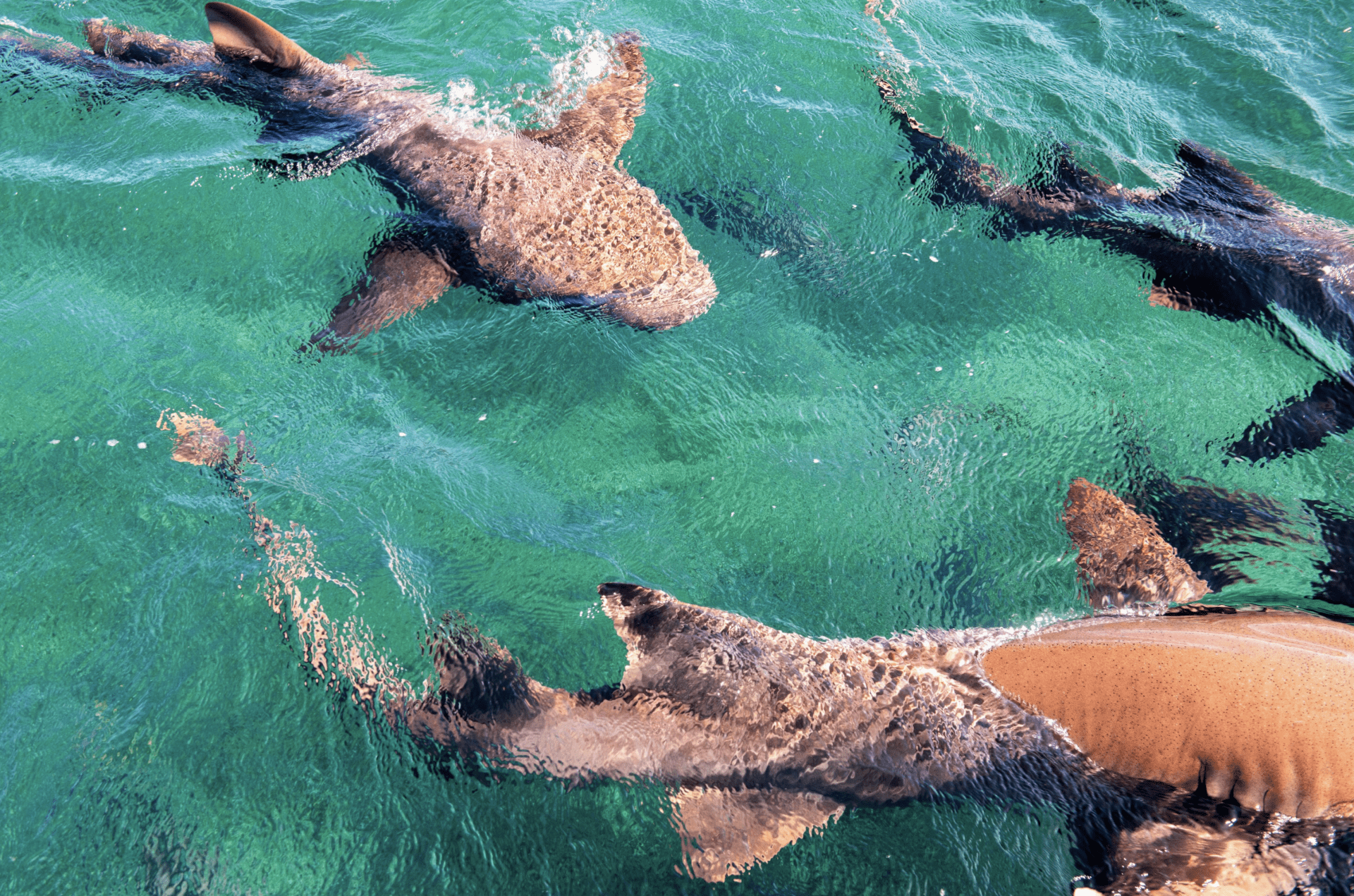
At Shark Ray Alley, part of Hol Chan Marine Reserve near Ambergris Caye, nurse sharks and southern stingrays gather in shallow water in numbers reliable enough that tour boats run out from both San Pedro and Caye Caulker daily. Both species are naturally docile, making this one of the most accessible marine wildlife encounters in the country.
18. Bottlenose Dolphins
Bottlenose dolphins are a regular sight around Belize’s cayes and atolls, often seen riding a boat’s wake or feeding near the reef. Turneffe Atoll in particular has an active resident population that researchers have studied for years.
Frequently Asked Questions
What is the national animal of Belize?
The Baird’s tapir, known locally as the “mountain cow,” despite being unrelated to cattle. It’s the largest land mammal in Central America.
Are jaguars easy to see in Belize?
No. Jaguars are elusive, mostly nocturnal, and naturally wary of people, so most visitors won’t see one even in prime habitat like Cockscomb Basin. A visit there is better framed as a chance to be in genuine jaguar territory than a guaranteed sighting.
Where is the best place to guarantee wildlife sightings in Belize?
The Belize Zoo, near Belize City, houses rescued and non-releasable animals native to the country, including tapirs, jaguars, harpy eagles, and gibnuts, and is the most reliable place to see many of these species up close.
What is a gibnut?
A large, spotted, ground dwelling rodent also called a paca, known in Belize as the “royal rat” after Queen Elizabeth II was famously served it during a 1985 visit. It’s considered a genuine delicacy in Belizean cuisine.
Can you see marine wildlife and inland wildlife on the same trip to Belize?
Yes, easily. Belize is small enough that a few nights inland at a jungle lodge or wildlife sanctuary can be paired with time on the coast or one of the cayes without extensive travel between the two.
Explore more of Belize’s wild spaces in our Rainforest & Jungle Adventures guide, dive deeper into marine life in our Offshore and Marine Activities guide, or head back to our full Things to Do in Belize hub for the complete picture.